


By Matthew Gutierrez and Shawn O’Malley
Listening to a single company’s quarterly earnings call can tell you a lot about a business. But sifting through earnings calls from every S&P 500 company can tell you important things about the economy.
For example, after peaking during Covid, executives’ mention of “supply chains” has dropped off dramatically in the past year, with many of the remaining mentions being positive, suggesting supply chain issues are fading away.
💭 It’s not the most rigorous way to assess supply chains’ health, but it’s an effective barometer. And that barometer increasingly tells us that corporate leaders see supply chain hiccups as not worth highlighting to shareholders.
Our Chart of the Day shows this in detail.
— Matthew & Shawn
Here’s today’s rundown:

Today, we'll discuss the biggest stories in markets:
CEO comp soars, teacher pay stagnates
Gucci’s China sales weigh on luxury industry outlook
This, and more, in just 5 minutes to read.
POP QUIZ
Chart of the Day

In The News
💸 CEO Pay Soars While Teacher Pay Continues to Stall

Two compensation themes worth highlighting: CEOs are banking more amid this rising stock market, while teacher pay stagnates.
Take chipmaker Broadcom, whose CEO Hock Tan raked in $161 million. Or Cisco’s CEO, who earned nearly $70 million last year. Or Adobe’s CEO, who brought in about $87 million in 2023.
The driver: Stock option awards, mostly amid a booming market.
Pay for top execs at 187 S&P 500 companies hit a new high last year after a rough 2022.
Median pay hit $15.6 million for the group, up from about $14.1 million in 2022.
The Wall Street Journal analyzed about 130 CEOs who received bigger pay packages last year than in 2022. Only 55 received smaller payouts.
Not in the classroom: On the flip side, American teachers’ pay remains neutral. Teacher pay will never match that of CEOs, but the average teacher pay has barely budged since 1990 despite more public school funding.
Most new funding has gone toward additional staff, soaring healthcare costs, and pensions.
Some states like Tennessee and Maryland are creating minimums of $50,000 or $60,000 for all first-year teachers. (Democratic lawmakers have introduced a bill to set a national starting teacher salary of $60,000.) As one state rep noted: “If you want to have quality teachers enter the workforce and stay in the workforce, you have to pay them.”

From The Wall Street Journal
Why it matters:

From The Wall Street Journal
Teacher pay is a focus point after high teacher turnover rates and a rapid decline in young adults interested in becoming teachers.
Last year, the overall average salary of a public school teacher was $66,397, about the same as in 1990, adjusted for inflation. Meanwhile, salaries of other college-educated workers have trended upward in the long term.
Meanwhile, CEO pay keeps chugging higher, frustrating some onlookers as inflation and layoffs hit lower-level workers.
Of the 20 top-paid CEOs, eight lead tech companies and seven lead financial firms.
The Economic Policy Institute found that CEO compensation rose 1,209% from 1978 to 2022, compared with a 15.3% increase in the typical worker’s compensation. In 2022, CEOs were paid 344 times as much as a typical worker. In 1965? They were paid only 21 times as much as a typical worker.
Together With RALAcademy
The Silver Tsunami of Seniors

💭 Discover how investors use this strategy to make 10k net profit per month…every month.
Begin your journey toward financial freedom with an added bonus: positively impacting others’ lives with the RAL model of investing. That is, investing in Residential Assisted Living.
It’s a niche but booming market, a once-in-a-generation investment opportunity projected to be in high demand as the Boomer generation retires over the next two decades!
Through RALAcademy’s free RAL 101 Introduction Course, you can learn how to build and operate your own RAL business.
Uncover the industry's ins and outs and explore the financial opportunities that await—your chance to build a sustainable business and create a lasting legacy.
Enroll now and take the first step toward your Residential Assisted Living success story!
👜 Gucci’s China Woes Ripple Across Luxury Industry
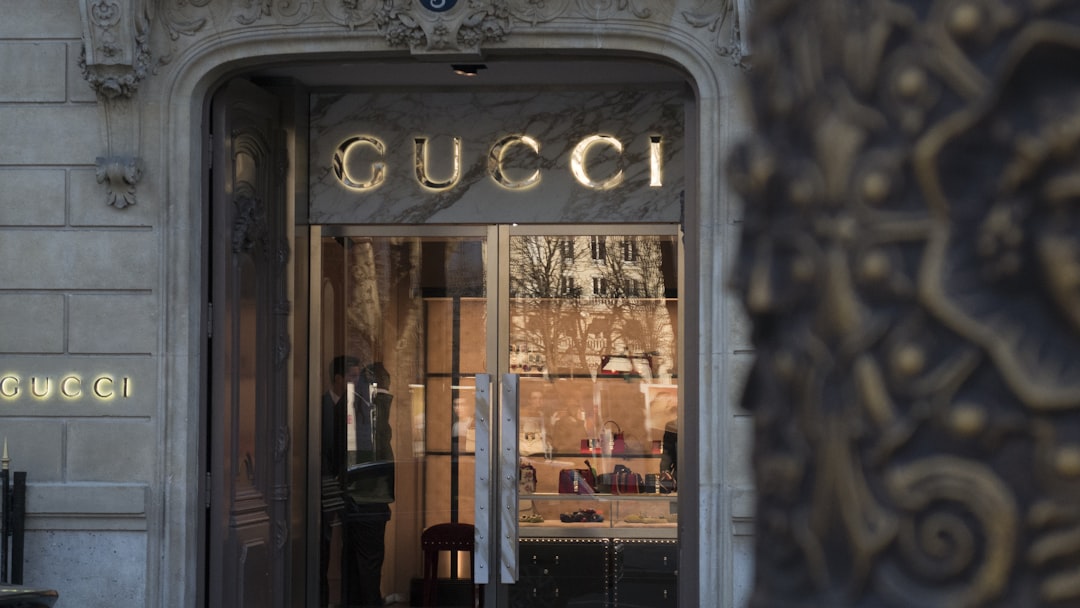
The global luxury market goes through China, and that’s a problem for high-end apparel makers because China’s consumer base isn’t firing on all cylinders.
Don’t take our word for it; take Gucci’s: Its parent company, Kering SA, lost over $9 billion in market value after highlighting a sales slump in China last week.
Post-lockdown bust: For wealthy Chinese, freedom from harsh Covid lockdowns has hardly been enough to spur spending, especially on luxuries.
Rising unemployment, a property market downturn, and a dragging stock market, among other deflationary forces, are having ill effects on consumer confidence. This raises the bar for getting Chinese shoppers to swipe their credit cards (or, as is more common in China, use their phones to make a payment).
That’s translated into meager Asian-Pacific sales—a 20% quarterly drop, to be specific—for Gucci, which Bloomberg calls “one of the most volatile of the major luxury brands, its fortunes rising and falling based on buzz around designers.”
Why it matters:
Although Gucci seems to be faring the worst of the major luxury brands, its problems aren’t isolated. Last month, exports of Swiss watches to China fell by 25%, while second-hand prices for premium watches fell over 40% in January year over year.
Combined, China and Hong Kong are by far the largest market for Swiss watches globally.

Still, the global luxury market is growing, expected to grow by 4-6% in 2024 after increasing 12% last year. To keep the good times rolling, brands like LVMH, Prada, Kering, and Hermes may need to reconsider their reliance on Chinese consumers.
As the CEO of a luxury consultancy told Bloomberg, “Luxury brands in general have realized that some of them were too reliant on the Chinese consumer. They realized that they can’t put all their eggs into one basket anymore.”
More Headlines
🫢 Boeing’s CEO steps down amid safety issues
🏙 New York City’s millionaire population soars 48% in 10 years
👀 Former President Trump’s bond for fraud charges cut to $175 million
📝 Spotify tests video courses teaching everything from music production to Excel
🫙 Diving into a marketing mystery: Why do capers come in such tiny jars?
🚙 Nissan unveils 30 news models and EV cost cuts
Quick Poll
Shares in luxury goods companies generally are [blank] investments
Yesterday, we asked: Do you own a mutual fund today?

— One reader said No, adding “Have always picked my own companies.” Commented another: “Fees are too high 😒 ”
— On team Yes: “While I do own mutuals funds I haven't purchased any for more than 5 years. I prefer ETF's now.”
— Several readers pointed out the fee differential: “ETFs better represent the market, and the lower fees make an enormous impact on long-term returns.”
TRIVIA ANSWER
See you next time!
That's it for today on We Study Markets!
If you’re a sophisticated investor looking for more professional insights, check out We Study Markets Pro.
Enjoy reading this newsletter? Forward it to a friend.
Was this newsletter forwarded to you? Sign up here.
Use the promo code STOCKS15 at checkout for 15% off our popular course “How To Get Started With Stocks.”
Advertise with us.
Follow us on Twitter.
Keep an eye on your inbox for our newsletters on weekdays around 6pm EST and on weekends. If you have any feedback for us, simply respond to this email.
You can also leave your comments/suggestions/feedback anonymously here.
What did you think of today's newsletter?
All the best,


P.S. The Investor's Podcast Network is excited to launch a subreddit devoted to our fans in discussing financial markets, stock picks, questions for our hosts, and much more!
Join our subreddit r/TheInvestorsPodcast today!
© The Investor's Podcast Network content is for educational purposes only. The calculators, videos, recommendations, and general investment ideas are not to be actioned with real money. Contact a professional and certified financial advisor before making any financial decisions. No one at The Investor's Podcast Network are professional money managers or financial advisors. The Investor’s Podcast Network and parent companies that own The Investor’s Podcast Network are not responsible for financial decisions made from using the materials provided in this email or on the website.
