
In partnership with


By Matthew Gutierrez and Shawn O’Malley
If you can read this, that means you didn’t burn your eyes staring at today’s solar eclipse, which cut straight through America’s heartland.
The economic impact of eclipse watch parties, with a surge in travel to cities along the trajectory with 100% coverage, is estimated at roughly $6 billion.
On the other hand, the U.S. will lose 30 gigawatts of solar power during the eclipse, equivalent to 30 nuclear reactors’ output.
🌥️ Our view was mostly clouds, but others got better videos.
— Matthew & Shawn
Here’s today’s rundown:

Today, we'll discuss the biggest stories in markets:
Blackstone’s $10 billion deal
Zimbabwe’s new gold-backed currency
This, and more, in just 5 minutes to read.
POP QUIZ
Chart of the Day

Together With Prompts Daily*

Have you heard of Prompts Daily newsletter? I recently came across it and absolutely love it.
AI news, insights, tools and workflows. If you want to keep up with the business of AI, you need to be subscribed to the newsletter (it’s free).
Read by executives from industry-leading companies like Google, Hubspot, Meta, and more.
Want to receive daily intel on the latest in business/AI?
*Sponsored content
In The News
🏢 Blackstone’s $10 Billion Deal Is Latest Bet Property Near Lows

Made Using DALL-E
Big bucks have been dropped on apartments.
Blackstone, the financial titan, is going big with an all-cash deal worth $10 billion to swoop up Apartment Income REIT, aka AIR Communities, which has 76 rental communities, mainly in hotspots like Miami, Los Angeles, and Boston.
All clear: Blackstone isn't just buying; they're splurging an extra $400 million to jazz up these prime properties. This acquisition is Blackstone's grandest move yet in the multifamily market, signaling their bullish optimism on rental housing and a possible rebound in commercial real estate. It’s contrarian investing meets real estate.
As The Wall Street Journal reported Monday, the acquisition is Blackstone’s largest transaction in the multifamily market. It reflects the firm’s bullishness on rental housing and its belief that commercial real estate overall is bottoming.
“We can see the pillars of a real-estate recovery coming into place,” Gray said this year. “We are, of course, not waiting for the all-clear sign and believe the best investments are made during times of uncertainty.”
Funded by Blackstone's $30.4 billion global real estate fund, this deal is set to close in the third quarter. Blackstone views multifamily and rental housing as prime spots for investment, especially as these markets remain relatively unscathed amid new supply and rising interest rates.

From The Wall Street Journal
Why it matters:
Blackstone is feeling the real estate recovery vibes. Despite a slight dip in earnings earlier this year due to shrinking real estate values, Blackstone is on an investment spree. They've recently snapped up a $17 billion loan portfolio, joined forces with Digital Realty for a $7 billion data center venture, and previously acquired Tricon Residential for $3.5 billion.
The AIR Communities deal comes with a 25% premium, priced at $39.12 a share in an all-cash deal. The news sent AIR Communities' shares soaring over 22% on Monday.
Fundamentally sound? AIR Communities is no small fry. Based in Denver, they've got a luxe portfolio of 76 apartment communities catering to the high rollers in Miami, Washington, and other swanky spots. Their average tenant earns a hefty $237,000 annual income, well above the national average.
Despite the apartment market feeling a squeeze lately, with prices taking an 8% dip in the past year, Blackstone is betting big. They believe in AIR Communities' high-quality apartments and strong fundamentals — a pivot to quality amid industry uncertainty. Time will tell if their big bet pays off.
More Headlines
📈 U.S. states where everyday Americans earn the most money
💼 Why the March jobs report was about as good as it gets
🥪 Jersey Mike’s Subs considers $8 billion sale to Blackstone
😅 Tech companies may soon run out of data on the internet to train AI on
🛑 Junior bankers say they’ll quit after bonuses fall
👉 Biden’s new student loan forgiveness plan could erase up to $20k in interest
🎓 Ivy League schools will charge students over $90,000 per year
🖥️ White House unveils $6.6 billion plan for building leading computer chips in the U.S.
🇿🇼 Zimbabwe Fights Inflation With New Gold-Backed Currency
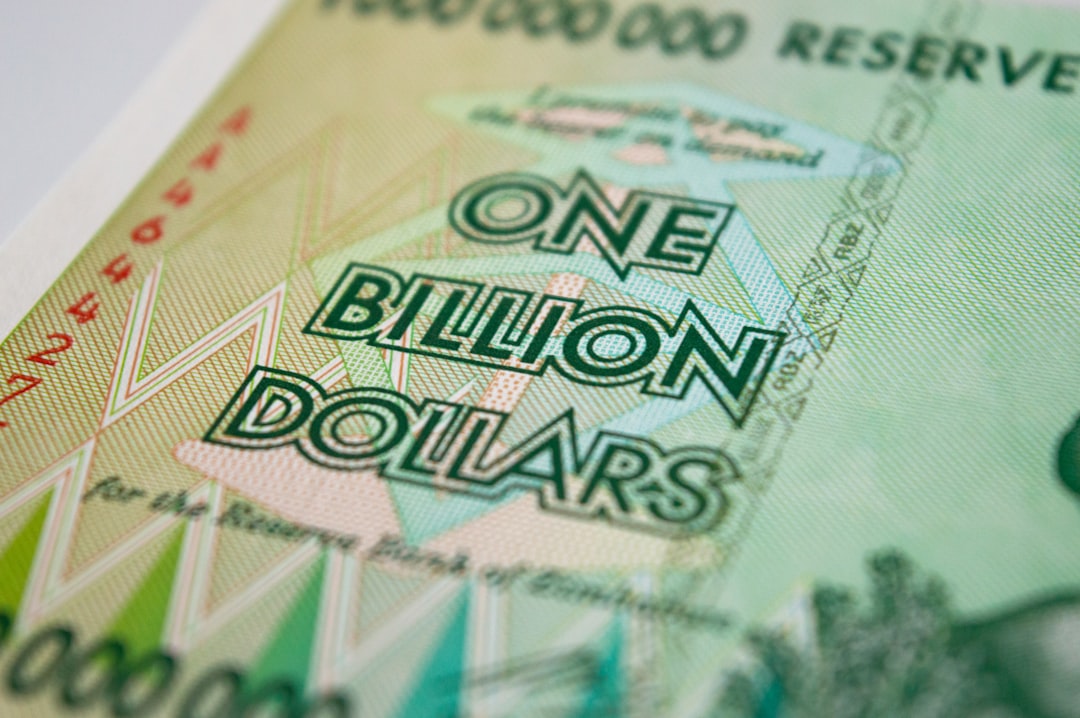
You’re reading the headline right — in the 21st century, countries are still opting for a gold standard.
Well, not countries, but a country: Zimbabwe. Long struggling to get inflation under control after money printing wrecked the Zimbabwe dollar’s value, the country of over 16 million is taking notes from the past, opting for a new gold-backed currency to restore economic order.
ZiG, standing for Zimbabwe Gold, will have an initial exchange value of 13.56 to 1 USD (Zimbabwe’s current currency trades at 36,000 for 1 USD.)
While bold, the move isn’t without historic precedent. In post-World War I Weimar Germany — history’s most famous inflationary saga where wheelbarrows of cash were needed for even small transactions — the country first turned to the interim Rentenmark (backed by industrial and agricultural assets) and shortly thereafter to the Reichsmark, which was on a gold standard.
Saving a currency: Zimbabwe hopes to follow a similar path, using a new currency tied to a hard asset like gold, which its central bank can't print ad infinitum, to restore faith in using the local currency.
Zimbabwe’s central bank governor commented, “We want a solid and stable national currency…it doesn’t help to print money.”
The new currency will be “anchored in and backed or covered by a composite basket of foreign currency reserves and precious metals received (mainly gold) and valuable minerals,” he added.
One ton of gold in the government’s vaults and 1.5 tons offshore will do the heavy lifting in underpinning the currency’s (hopefully) more stable exchange rate.

Why it matters:
A melting currency brings an economy to its knees. It’s nearly impossible for businesses and savers to plan for the future if they don’t know what the money they use will be worth, an issue Zimbabweans know all too well (since 2007.)
In extreme cases, the currency devalues so fast that businesses must constantly update prices to stay on top of inflation — the price of coffee at breakfast may differ by lunchtime.
When faith in a currency is lost, a race begins to spend the currency as fast as possible, as people hope to exchange their increasingly worthless savings for tangible goods or financial assets that’ll better retain value.
In the past, Zimbabwe has resorted to making inflation illegal, arresting business leaders for raising prices and violating a nationwide price freeze.
Is this a lasting fix? Whether Zimbabwe has enough foreign currency and gold reserves to support the ZiG will determine its success, though economists aren’t optimistic.
Given that the country has had several currencies in recent years, Zimbabweans aren’t overly confident yet that their currency woes are over, either.
Years of political instability and falling behind on debt payments have left Zimbabwe financially isolated.
That leaves it with limited access to international markets to, at a minimum, rebuild its reserves of foreign currencies (by exporting goods & services) to defend its own currency’s value (by selling foreign currencies and buying the ZiG in forex markets).
Zimbabwe’s currency reserves are barely enough to cover one month’s worth of its imports, a fraction of its African peers.
Do You Want To Supercharge Your Career?*

Navigating a big transition is hard to do. It’s one thing to set a lofty goal, and it’s another thing to have the support system for yourself to follow through.
Sidebar’s approach is focused around small peer groups, a tech-enabled platform, and an expert-led curriculum. Members say it’s like having their own Personal Board of Directors.
“Providing and receiving support from others who play a similar role to you is one of the best ways to grow your capabilities and succeed.” - Vice President, Roku
💭 Nothing will get you further in your career than learning from your peers — it’s a true competitive advantage. Join over 25,000 top senior leads who have taken the first step at sidebar.com.
*Sponsored content
Quick Poll
On Friday, we asked: Do you think biased media coverage has meaningfully impacted your perception of the economy?

— A sampling of comments included variations of the phrase, “I don’t watch mainstream media due to their biased nature.” Said another: “I don’t assume the media assume the economy, so I listen to multiple sources and make up my own mind. That’s what an investor does!”
— Another reader wrote in, “Following Reuters, FT.com, and Bloomberg allows me to make my own interpretation of the state of the world’s economy.”
TRIVIA ANSWER
See you next time!
That's it for today on We Study Markets!
If you’re a sophisticated investor looking for more professional insights, check out We Study Markets Pro.
Enjoy reading this newsletter? Forward it to a friend.
Was this newsletter forwarded to you? Sign up here.
Use the promo code STOCKS15 at checkout for 15% off our popular course “How To Get Started With Stocks.”
Advertise with us.
Follow us on Twitter.
Keep an eye on your inbox for our newsletters on weekdays around 6pm EST and on weekends. If you have any feedback for us, simply respond to this email.
You can also leave your comments/suggestions/feedback anonymously here.
What did you think of today's newsletter?
All the best,


P.S. The Investor's Podcast Network is excited to launch a subreddit devoted to our fans in discussing financial markets, stock picks, questions for our hosts, and much more!
Join our subreddit r/TheInvestorsPodcast today!
© The Investor's Podcast Network content is for educational purposes only. The calculators, videos, recommendations, and general investment ideas are not to be actioned with real money. Contact a professional and certified financial advisor before making any financial decisions. No one at The Investor's Podcast Network are professional money managers or financial advisors. The Investor’s Podcast Network and parent companies that own The Investor’s Podcast Network are not responsible for financial decisions made from using the materials provided in this email or on the website.
